Why settle for less, when Jaisalmer’s comfort gem – Hostel Camel Castle – awaits you?
Jaisalmer Fort
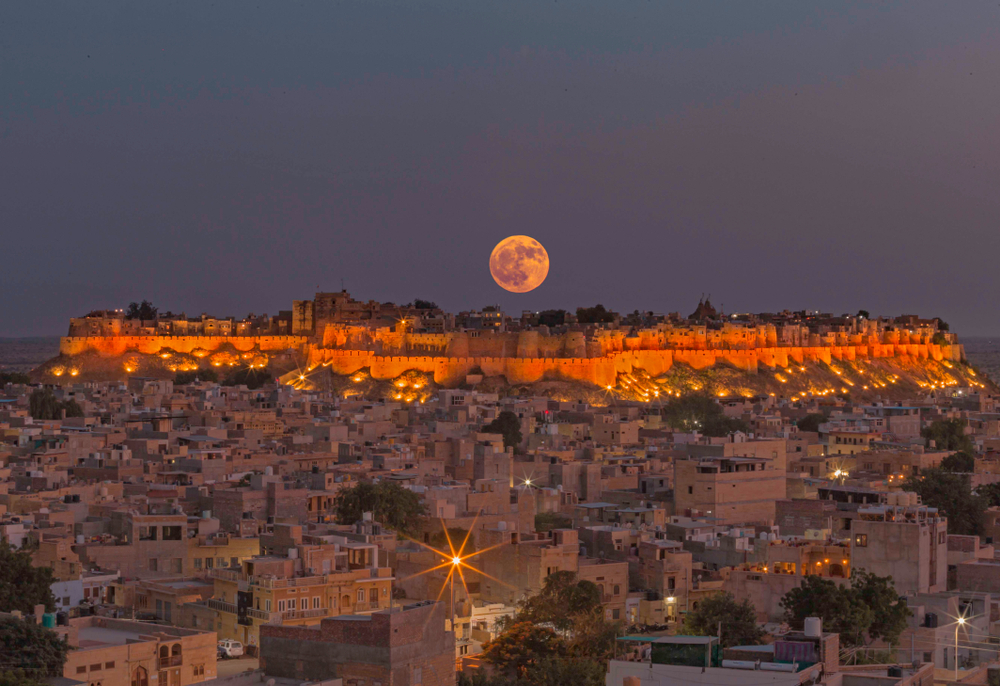
Jaisalmer Fort, located in the golden city of Jaisalmer in Rajasthan, India, is one of the largest fully preserved fortified cities in the world. Built in 1156 by Rawal Jaisal, the fort rises majestically from the desert landscape and is constructed from yellow sandstone, giving it a golden glow, especially at sunset. Often referred to as the “Golden Fort” or Sonar Quila, it is unique for being a “living fort,” as thousands of people still reside within its walls. For centuries, the fort served as a thriving trade and cultural center along the Silk Route, and even today, its winding lanes, temples, and houses reflect a rich blend of history and tradition.
Gadisar Lake
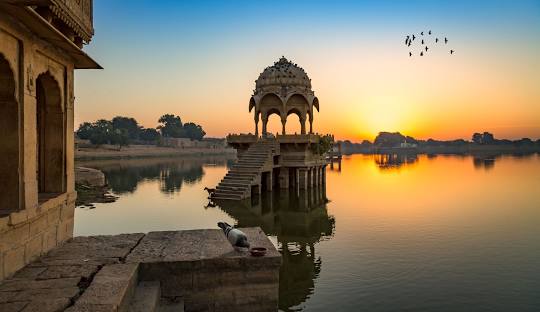
Gadisar Lake is situated on the outskirts of Jaisalmer city, in the Indian state of Rajasthan. Built in the 14th century by Maharawal Gadsi Singh, the lake originally served as a crucial water conservation tank for the arid desert region. Surrounded by intricately carved temples, shrines, ghats, and cenotaphs, it has long been both a spiritual and cultural center. Once the primary source of drinking water for the people of Jaisalmer, Gadisar Lake now stands as a popular heritage site where history blends with natural beauty. Its calm waters, flocks of migratory birds, and artistic sandstone structures make it a timeless attraction in the “Golden City.”
Patwa Haveli
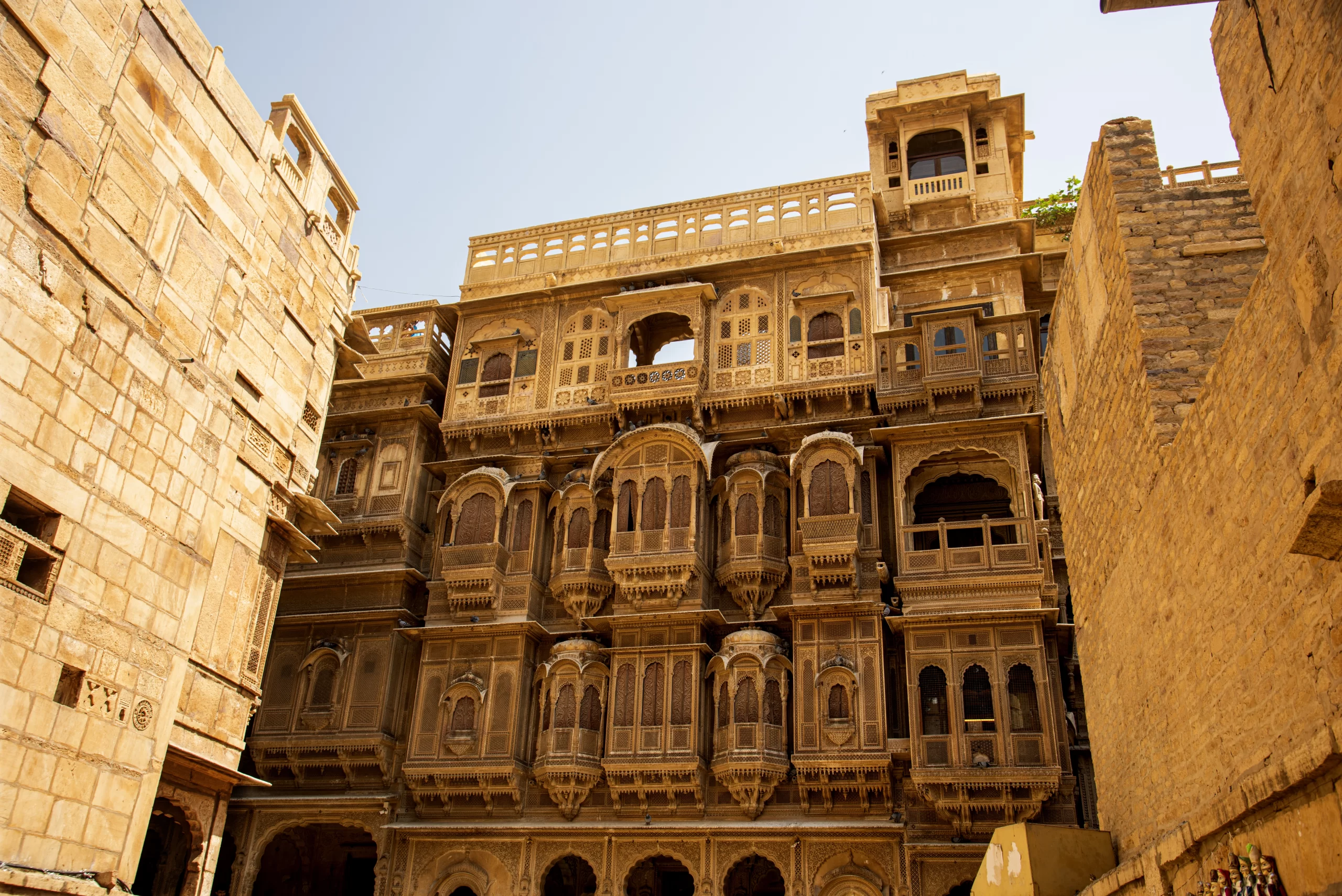
Patwa Haveli is located in the heart of Jaisalmer, Rajasthan, and is one of the most magnificent havelis in the city. Built in the early 19th century by Guman Chand Patwa, a wealthy trader, it is actually a cluster of five havelis constructed for his sons. Known for its intricate sandstone carvings, grand facades, and beautifully decorated interiors, the haveli showcases the artistic brilliance of Rajputana architecture. The complex includes detailed jharokhas, balconies, and mirror work that reflect the opulence of the Patwa family. Today, Patwa Haveli stands as a celebrated heritage site, offering visitors a glimpse into the lifestyle, craftsmanship, and prosperity of Jaisalmer’s past.
Bara Bagh Temple
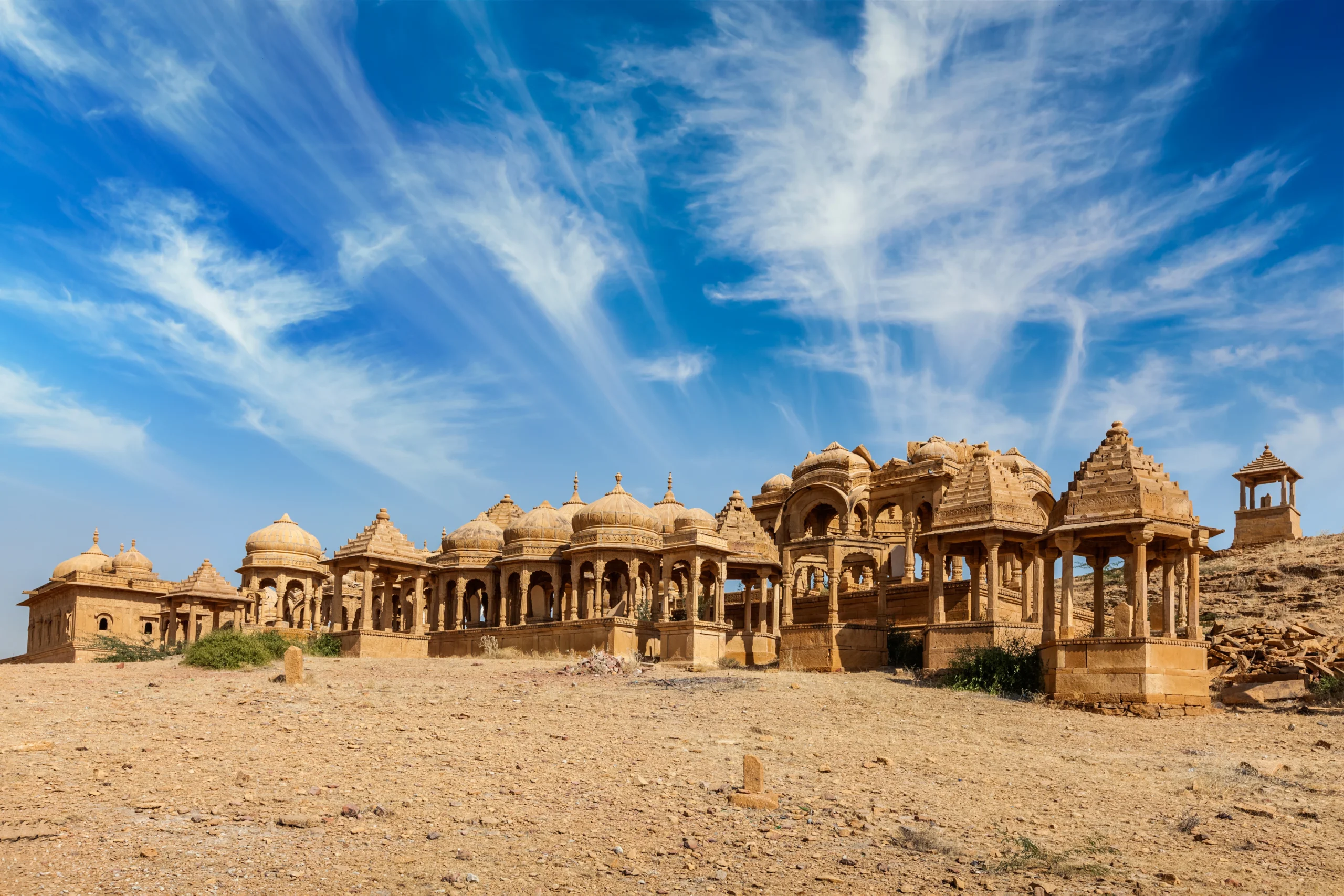
Bada Bagh, located on the outskirts of Jaisalmer in Rajasthan, is a historic garden complex renowned for its cenotaphs, locally called chhatris. Built in the 16th century by Maharaja Jai Singh II and later completed by his descendants, the site was meant to honor the rulers of Jaisalmer. Each sandstone cenotaph is intricately carved and dedicated to a different king, creating a striking panorama against the desert landscape. Surrounded by arid hills and offering sweeping views of windmills and the golden terrain, Bada Bagh is both a place of heritage and reflection. Today, it stands as a timeless reminder of Jaisalmer’s royal legacy and architectural splendor.
Kuldhara Village
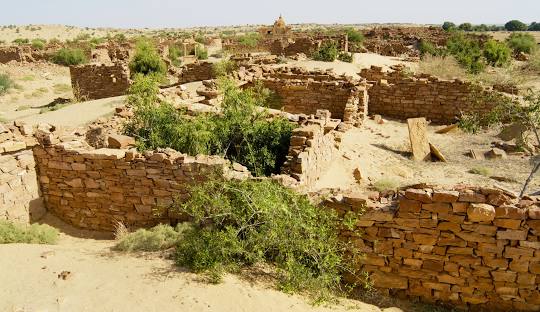
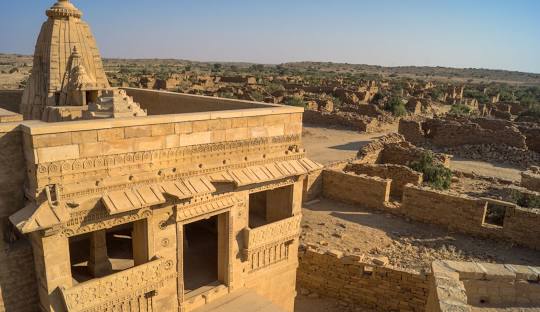
Kuldhara Village, located about 18 kilometers from Jaisalmer in Rajasthan, is an abandoned settlement known for its eerie silence and mysterious past. Established in the 13th century by the prosperous Paliwal Brahmins, the village was once thriving with life, featuring well-planned streets, temples, and houses. According to legend, the entire population of Kuldhara vanished overnight in the early 19th century, leaving behind haunting ruins. Stories suggest oppressive taxation and threats from a local ruler forced the villagers to flee, after which the site was believed to be cursed. Today, Kuldhara stands as a protected heritage site, attracting travelers with its haunting beauty and tales of mystery.